A few chickens. One cow. Zero regrets.
The story of our Western New York Highland cattle farm, and how "well, that won't hurt" turned into 100 acres of animals.
Hey, neighbor.
Every farm has an origin story. Ours starts the way a lot of them do: with a few chickens and absolutely no plan to become a Western New York Highland cattle farm.
That was about four years ago. Today we're a family of four on 100 acres near Farmersville Station, with Highland cattle, registered Longhorns, mini donkeys, a stubborn mule, turkeys, and more chickens than we can count. Here's how that happened.
It started with a few chickens
A few laying hens seemed like a nice, manageable start. Then came the thought every farmer will recognize: "Well, meat birds are only a few weeks."
Then came the next one: "A cow won't hurt."
Reader, it did not stay at one cow.
Farming runs in the family. I grew up on my family's dairy farm, and I've always had a passion for agriculture.
So maybe this was always going to happen. The chickens just gave it a head start.
Meet Wilma, our first cow
I have always loved Highland cattle. When I stumbled across Wilma, a Hereford x Highland, that was it. She became our very first cow, and it was an addiction from there.
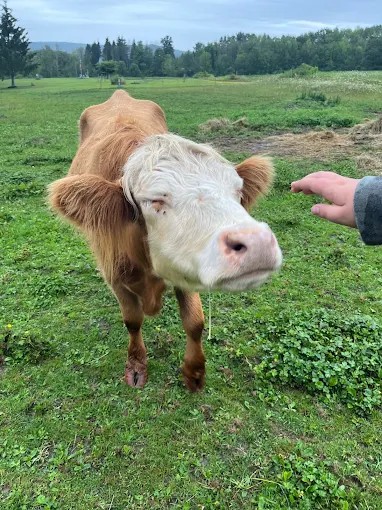
We went from one cow to five in a single summer. Meanwhile, the chickens multiplied far faster than the cattle ever could.
Along the way came Richard and Penelope, our first full Highlands. Shaggy, fluffy, and impossible not to love.

Richard is a mini Highland and now our resident bull. We also offer his stud services to other local farms looking for small Highland genetics. If that's you, send us a message on Facebook.
Then came the Longhorns (and everyone else)
I thought a Longhorn would be a cool addition, so I bought two. They were cool. So I bought five more.
That's pretty much how farm math works around here.
Who lives here now
- ~12head of cattle
- 3mini donkeys
- 1stubborn mule
- 8turkeys
- ?chickens (we lost count years ago)
Pretty much all of our animals run the show, but they're all super friendly. Once they're trained, they're petting zoo quality, and they know exactly how cute they are.
Even the littlest ones have big personalities. Take Ranger, our grumpy chick. He recently got himself wet, so he had to be dried off and bundled up in a towel to warm up. He was not impressed with any of it, but he was warm.

Why our donkeys and mule have a job
Our property is surrounded by acres of state land. That's beautiful, but it also means coyotes, foxes, and bears are a normal part of life here.
That's where the mini donkeys and Clint, our mule, come in. Besides being the comedians of the farm, they help keep predators at bay and look out for the rest of the herd. Donkeys tend to be naturally wary of canines like coyotes and foxes, and ours take that job seriously.
It's one of the things we love sharing most: on a working farm, almost every animal has a purpose, even the ones that act like they're on vacation.
A few farm FAQs
What is a Highland cross cow?
A Highland cross is a Highland bred with another breed. Wilma, our first cow, is a Hereford x Highland, and she's the reason we fell for the shaggy breed.
Do donkeys really protect livestock?
On our farm, they do. With coyotes, foxes, and bears nearby, our mini donkeys and our mule help keep predators at bay. Every animal and every farm is different, though, so it's worth talking to experienced owners before relying on them.
Do you offer mini Highland bull stud service?
Yes. Richard, our mini Highland bull, is available for stud service to local Western New York farms looking for small Highland genetics. Message us on Facebook to ask about details.
Can I visit and meet the animals?
We're planning farm tours by appointment beginning in 2027. Join the farm list and you'll hear first when booking opens.
Come along for the ride.
We're just a few years into this Western New York Highland cattle farm adventure, and there's a lot more story to tell.
Join our farm list for farm news, new animals, and tour updates as things come together.
Join the farm listWant to see the crew in action? Here's everywhere you can find us online, or read more on our blog.
← Back to all posts